

Performance marketing is a digital strategy where brands pay for measurable actions like clicks, leads, or sales. Understanding the types of performance marketing helps businesses improve targeting, conversions, and campaign efficiency effectively.
In 2026, businesses rely on advanced performance marketing channels to achieve faster growth, better ROI, and data-driven advertising success. These channels help brands track performance, optimize budgets, and acquire customers more efficiently online.
Performance-based advertising works through search ads, affiliate campaigns, influencer promotions, and social media strategies. Exploring the different types of performance marketing allows businesses to choose profitable methods and scale campaigns with measurable results.
If you want to learn these strategies practically, the WsCube Tech Performance Marketing Course can help you understand paid ads, targeting, and campaign optimization through real-world projects.
Key Takeaways:
- The best performance marketing types focus on measurable actions like sales, leads, app installs, and website conversions.
- Choosing the right performance marketing channels can help businesses reduce advertising costs while improving campaign performance.
- Understanding the types of performance marketing channels makes it easier to target audiences across multiple digital platforms.
- Data tracking and real-time optimization are major reasons why performance marketing delivers higher ROI than traditional advertising.
- Businesses using multiple performance marketing strategies can improve customer acquisition, engagement, and long-term online growth effectively.
What is Performance Marketing?
Performance marketing is a digital marketing strategy where businesses pay only for specific results like clicks, leads, sales, or app installs. It focuses on measurable results and better return on investment (ROI).
It uses platforms like Google Ads, Meta Ads, affiliate marketing, and search engine marketing to target the right audience. Marketers can track campaign performance, analyze data, and optimize strategies in real time.
Performance marketing helps businesses grow faster with cost-effective advertising and data-driven decisions. It is one of the most in-demand digital marketing skills for professionals, brands, startups, and e-commerce businesses worldwide.
What Are Performance Marketing Channels?
Performance marketing channels are digital platforms businesses use to generate measurable results like clicks, leads, and sales. They support various online advertising and customer acquisition strategies.
Performance marketing channels include search engines, social media, affiliate platforms, and email campaigns. These channels help brands target audiences and achieve measurable business growth online.
Recommended Professional
Certificates
Types of Performance Marketing (Different Channels)
Performance marketing helps businesses generate measurable results through targeted advertising strategies. Choosing the right performance marketing channels improves conversions, customer engagement, and long-term return on investment effectively. Below are the different types of performance marketing channels.
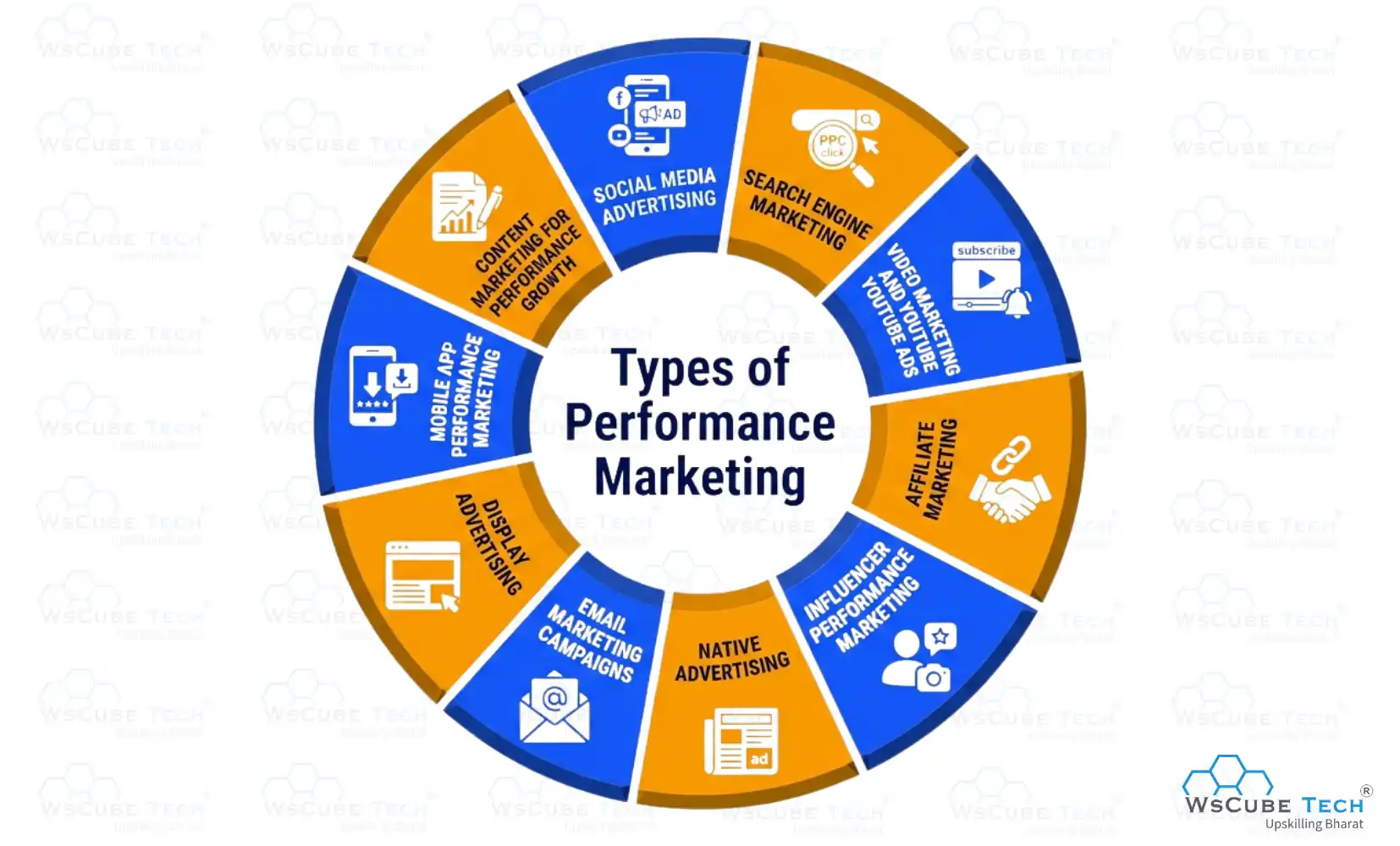
1. Social Media Advertising
Social media advertising uses platforms like Facebook, Instagram, LinkedIn, and X to promote products, increase engagement, and drive conversions through highly targeted advertising campaigns.
- Facebook and Instagram Ads: Facebook and Instagram ads help brands reach targeted audiences using demographics, interests, and behavior-based targeting. These ads support conversions, engagement, and brand awareness effectively.
- LinkedIn and Twitter/X Advertising: LinkedIn advertising works best for B2B marketing and professional audiences, while Twitter/X advertising helps brands increase visibility, engagement, and real-time audience interaction online.
- Best Social Media Performance Marketing Channels: Facebook, Instagram, LinkedIn, TikTok, and X are leading performance marketing channels because they provide advanced targeting, measurable analytics, and strong audience engagement opportunities.
2. Search Engine Marketing (SEM)
Search Engine Marketing is among the most effective performance marketing types that help businesses drive targeted traffic through paid search advertisements on search engines like Google and Bing.
- Google Ads and PPC Campaigns Explained: Google Ads allows advertisers to create PPC campaigns targeting users searching for specific keywords. Businesses pay only when users click ads, making campaigns highly measurable and cost-effective.
- Keyword Targeting and Conversion Tracking: Keyword targeting helps advertisers reach relevant audiences by searching for products or services. Conversion tracking measures clicks, leads, purchases, and campaign performance for better optimization decisions.
- Why SEM Is One of the Best Performance Marketing Types: SEM delivers fast visibility, targeted traffic, measurable conversions, and higher ROI. It is one of the best different types of performance marketing for lead generation and sales.
3. Video Marketing and YouTube Ads
Video marketing helps brands increase engagement, explain products visually, and improve conversions using creative storytelling and targeted video advertising campaigns online.
- Why Video Ads Improve Engagement: Video ads attract attention quickly, improve audience retention, and deliver messages effectively through visuals, audio, and storytelling techniques across digital platforms.
- Best Video Advertising Strategies: Successful video strategies include short-form videos, product demonstrations, storytelling content, influencer collaborations, and retargeting campaigns for better audience engagement and conversions.
- YouTube as a Powerful Performance Marketing Channel: YouTube is among the strongest performance marketing channels because it offers massive audience reach, advanced targeting, and measurable advertising performance analytics globally
4. Affiliate Marketing
Affiliate marketing is one of the most popular types of performance marketing where affiliates promote products and earn commissions for successful sales, clicks, or leads through referral links.
- How Affiliate Marketing Works: Brands partner with affiliates who promote products using blogs, videos, websites, or social media. Affiliates earn commissions whenever users complete desired actions through their unique tracking links.
- Best Affiliate Platforms for Beginners: Popular affiliate platforms include Amazon Associates, ShareASale, CJ Affiliate, Rakuten Advertising, and ClickBank. These platforms help beginners start affiliate campaigns with simple tracking and reporting tools.
- Benefits of This Type of Performance Marketing: Affiliate marketing offers low investment, better audience reach, measurable ROI, and scalable growth. It remains one of the most effective performance marketing channels for businesses today.
5. Influencer Performance Marketing
Influencer marketing is among the growing types of performance marketing where creators promote products to engage audiences and drive measurable sales, traffic, and brand engagement.
- How Influencer Campaigns Generate Sales: Influencers create authentic content that builds trust among followers. Their recommendations encourage purchases, website visits, app downloads, and improved customer engagement for brands.
- Tracking ROI in Influencer Marketing: Brands track influencer performance using affiliate links, promo codes, engagement metrics, conversions, impressions, and sales data to measure campaign effectiveness accurately.
- Best Platforms for Influencer Collaborations: Instagram, YouTube, TikTok, and LinkedIn are popular platforms for influencer collaborations because they provide high audience engagement and strong content visibility.
Upcoming Masterclass
6. Native Advertising
Native advertising promotes sponsored content that matches the design and experience of the platform, making advertisements appear more natural and less intrusive to users.
- What Is Native Advertising: Native ads blend with platform content while promoting products or services subtly. They improve user engagement because advertisements look similar to regular content experiences.
- Benefits of Native Ads for Brands: Native advertising improves click-through rates, audience trust, user engagement, and brand visibility. It is one of the most effective types of performance marketing channels today.
- Popular Native Advertising Platforms: Taboola, Outbrain, Revcontent, and Yahoo Native are widely used native advertising platforms that help brands distribute sponsored content to targeted audiences effectively.
7. Email Marketing Campaigns
Email marketing campaigns help businesses nurture leads, improve engagement, and drive conversions through personalized emails, automated workflows, and targeted promotional campaigns effectively.
- Performance-Based Email Marketing Strategies: Performance-based email strategies include segmentation, personalized messaging, abandoned cart emails, promotional offers, and A/B testing to increase conversions and customer retention.
- Automation and Lead Nurturing: Automation tools send timely emails based on user actions. Lead nurturing helps businesses guide potential customers through the buying journey efficiently.
- Measuring Email Marketing ROI: Businesses measure email ROI using open rates, click-through rates, conversions, bounce rates, and customer retention metrics to optimize future campaigns successfully.
8. Display Advertising
Display advertising uses banners, images, videos, and interactive creatives to attract users across websites, apps, and digital platforms for increased visibility and conversions.
- Banner Ads and Retargeting Campaigns: Banner ads increase brand awareness, while retargeting campaigns re-engage users who previously visited websites or interacted with products online before purchasing.
- Programmatic Advertising Explained: Programmatic advertising uses AI and automated systems to buy ad placements in real time, improving targeting accuracy and advertising efficiency for businesses.
- Display Ads as Performance Marketing Channels: Display ads remain vital for performance marketing channels because they increase visibility, retarget audiences, and support lead generation across multiple digital platforms effectively.
9. Mobile App Performance Marketing
Mobile app marketing focuses on app installs, user engagement, retention, and in-app conversions using targeted advertising campaigns across mobile devices and applications.
- App Install Campaigns: App install campaigns encourage users to download mobile applications through social media ads, search advertising, influencer promotions, and app store optimization techniques.
- In-App Advertising Strategies: In-app advertising includes rewarded ads, banner ads, native ads, and video advertisements designed to increase engagement and improve monetization opportunities within applications.
- Mobile Marketing Trends in 2026: AI-powered targeting, short-form videos, voice search, personalization, and privacy-focused advertising are major mobile marketing trends shaping campaigns in 2026.
10. Content Marketing for Performance Growth
Content marketing helps businesses attract audiences, generate leads, and improve SEO rankings using valuable blogs, videos, guides, and educational content strategies online.
- SEO-Driven Content Strategies: SEO-driven content focuses on keyword optimization, search intent, backlinks, and valuable information to improve rankings, organic traffic, and online visibility consistently.
- Lead Generation Through Content Marketing: Businesses generate leads through blogs, eBooks, webinars, landing pages, and downloadable resources that encourage users to share contact information voluntarily.
- Combining Content and Paid Advertising: Combining content marketing with paid advertising increases reach, improves conversions, and strengthens brand visibility across multiple performance marketing channels effectively.
Expand Your Marketing Skills
Different Types of Performance Marketing (Comparison)
Understanding the different types of performance marketing helps businesses compare channels based on ROI, targeting, engagement, scalability, and conversions to choose the best strategy for long-term growth.
| Type of Performance Marketing | Main Purpose | Best For | Cost Model | ROI Potential | Key Advantage |
| Affiliate Marketing | Generate sales through affiliates | E-commerce & bloggers | Commission-based | High | Low-risk and scalable |
| Search Engine Marketing (SEM) | Drive targeted search traffic | Lead generation & sales | PPC (Pay Per Click) | Very High | Instant visibility |
| Social Media Advertising | Increase engagement and conversions | Brand awareness & sales | CPC/CPM | High | Advanced audience targeting |
| Influencer Marketing | Promote through creators | Lifestyle & D2C brands | Sponsored/Commission | High | Builds trust quickly |
| Native Advertising | Blend ads with content | Content-focused brands | CPC/CPM | Medium-High | Non-intrusive advertising |
| Email Marketing | Nurture leads and customers | Retention & conversions | Subscription-based | Very High | High customer retention |
| Display Advertising | Increase visibility online | Brand awareness | CPC/CPM | Medium | Strong retargeting options |
| Video Marketing & YouTube Ads | Improve engagement visually | Product promotion | CPV/CPC | High | Better audience retention |
| Mobile App Marketing | Increase app installs and usage | App businesses | CPI/CPC | High | Mobile-focused targeting |
| Content Marketing | Generate organic traffic and leads | SEO & authority building | Long-term investment | High (Long-Term) | Sustainable growth |
How to Choose the Right Performance Marketing Channels?
Choosing the right marketing channel depends on business goals, audience behavior, and budget. Understanding performance marketing types helps brands improve targeting, conversions, and long-term campaign success.
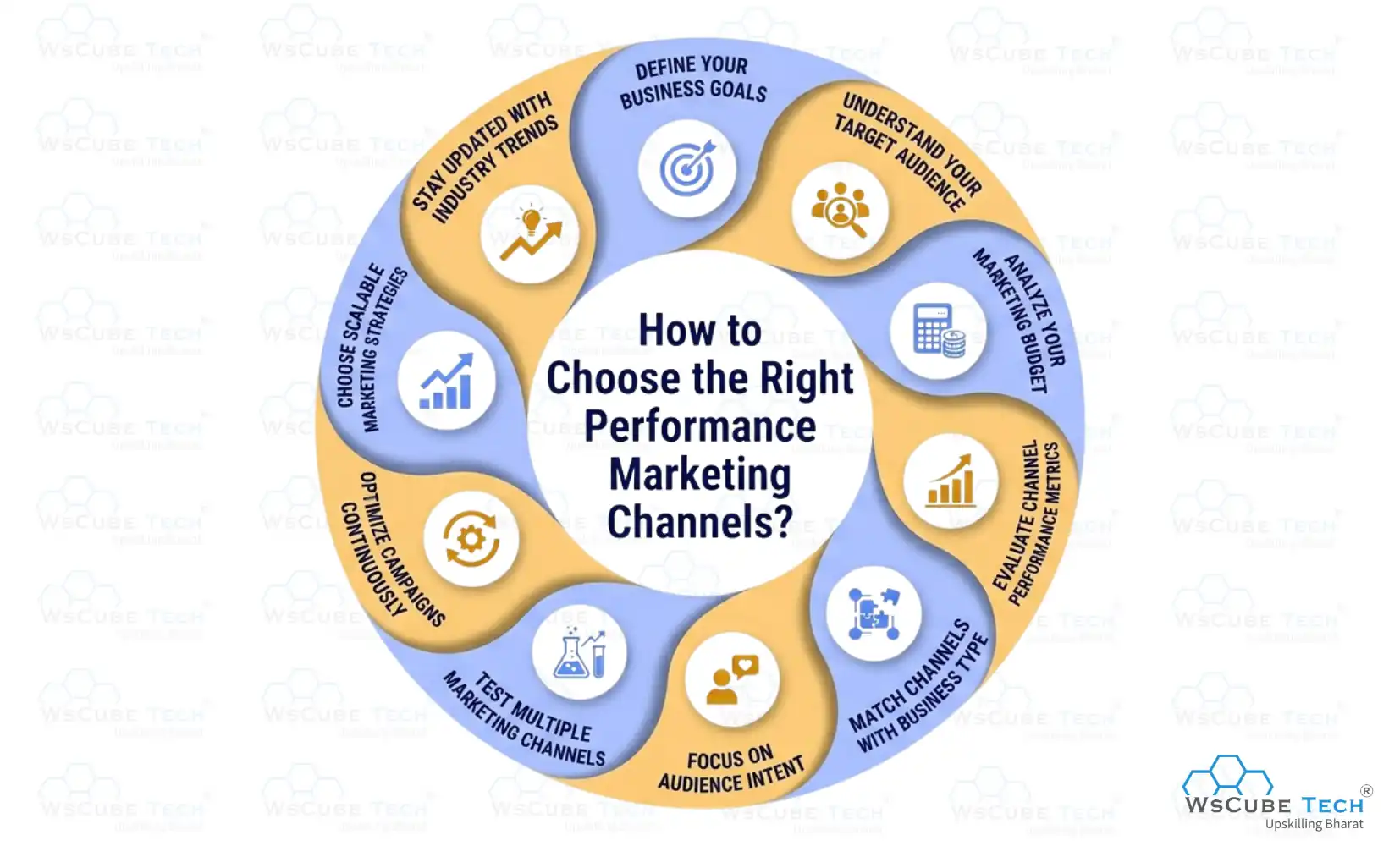
1. Define Your Business Goals: Start by identifying whether your goal is brand awareness, lead generation, sales, or app installs. Clear objectives help businesses select suitable performance marketing channels for better results.
2. Understand Your Target Audience: Research audience interests, demographics, online behavior, and preferred platforms carefully. Understanding users help businesses choose the right types of performance marketing channels for maximum engagement and conversions.
3. Analyze Your Marketing Budget: Different marketing strategies require different budgets and resources. Businesses should compare advertising costs, expected returns, and scalability before investing heavily in any marketing campaign.
4. Evaluate Channel Performance Metrics: Track metrics like CTR, conversion rates, CPA, and ROI regularly. Performance data helps businesses understand which marketing channels generate profitable and consistent customer acquisition results.
5. Match Channels with Business Type: E-commerce brands perform well on social media and affiliate marketing, while B2B businesses benefit more from LinkedIn advertising, email marketing, and search engine campaigns.
6. Focus on Audience Intent: Choose channels based on customer intent and buying stage. Search ads target ready-to-buy users, while social media and content marketing improve awareness and engagement effectively.
7. Test Multiple Marketing Channels: Running A/B tests across different platforms help businesses discover which campaigns, audiences, and creatives